

Hypnotherapy for habits and addictions: sessions, cost and working online
Thinking about hypnotherapy for a habit, but not sure what actually happens or what you’d be signing up for? This page covers the practical side: what happens in a session, how many you might need, what it costs, how it works over Zoom and whether the effects last. If you first want to know whether hypnotherapy works at all, I’ve written a separate, honest look at the evidence for hypnotherapy.
If you’ve tried to change a habit on your own and it keeps coming back, it makes sense to want straight answers before you book anything.
I’ve spent 17 years in clinical practice. I have a psychology degree and a Postgraduate Certificate and Postgraduate Diploma in Clinical Hypnotherapy, both with Distinction. You can read more about my qualifications.
Hypnotherapy for addiction: what I help with, and what I don’t
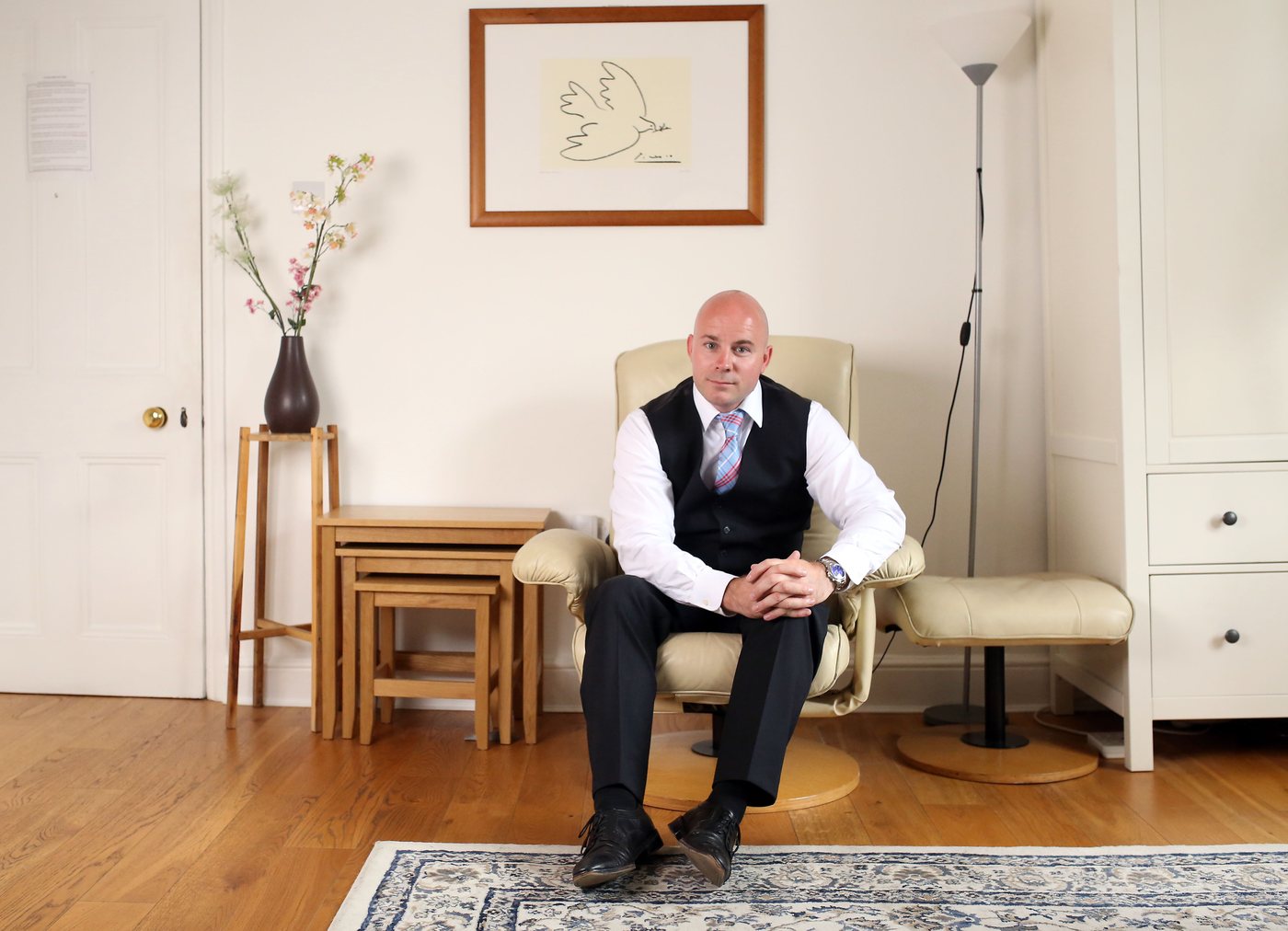
Most of my work is with habits that have got out of hand: smoking and vaping, sugar and snacking, scrolling and phone use, nail biting and similar habits. Here hypnotherapy can help with the triggers, the stress and the automatic routines behind the habit. It still relies on your own effort, and you’ll have things to practise between sessions.
For alcohol or drug dependence, gambling and other compulsions, hypnotherapy is not a treatment, and I don’t sell it as one. If that’s what you’re dealing with, your GP or a specialist service needs to be involved, and my help with addiction page lists where to go. I can work alongside that care on stress, sleep and confidence, and I’ll ask about it before we start. If you’re not sure where you sit, the free habit check can help.
What happens in a hypnotherapy session
- A consultation call first. We talk for a while about the habit, what you’ve tried and whether I’m the right person to help. It costs £49, and the fee comes off your first session if you go ahead.
- Talking it through. The session starts with a conversation about when the habit happens, what sets it off and what it does for you. This is where the real work is planned.
- The hypnosis. You sit or lie back with your eyes closed while I guide you into a relaxed, focused state and work on the parts of the habit we’ve talked about. You stay aware throughout and can open your eyes at any time.
- A recording to keep. Afterwards you get a recording of the hypnosis. Listening back between sessions is a big part of making the change stick.
How many sessions of hypnotherapy will I need?
Honestly, it varies, and I’d be wary of anyone who gives you a fixed number before they’ve heard your story. For one fairly recent habit, a single 90 minute session can give us enough time to cover the triggers and rehearse what you’ll do instead. Three sessions usually suit one habit, such as smoking or sugar, because we can check how things are going and adjust. Five suit habits that go back years, or more than one at once. Ten are for long-standing or several issues, or for ongoing support alongside other care.
We’ll agree on what makes sense during the consultation call. You won’t be pushed into a package.
How much does hypnotherapy cost?
Fees vary a lot between hypnotherapists, and I haven’t found a reliable UK survey of typical prices, so I won’t quote an average. These are my own prices for one to one sessions over Zoom:
| Option | 60 minute sessions | 90 minute sessions |
|---|---|---|
| Single session | £399 | £499 |
| 3 sessions | £798 | £998 |
| 5 sessions | £1,197 | £1,497 |
| 10 sessions | £2,199 | £2,699 |
The £49 consultation fee comes off your first session. Sessions never expire, and the price is locked in even if my rates go up. Packages of five or more sessions can be shared with a friend or family member. Current prices, including in US dollars, are on my work with me page.
Whoever you choose, ask what is included, whether you get a recording and what happens if you need to rearrange. If you’d like to try hypnosis before paying anything, there are more than 2,300 free sessions on my podcast, The Hypnotist.
Does hypnotherapy work over Zoom?
All my sessions are online. Hypnosis is mostly about voice and attention, so it suits video well, and some people relax more readily at home than in a clinic. You’ll need a quiet room, a decent internet connection and somewhere comfortable to sit or lie back. Headphones help.
I won’t tell you online is proven to be as good as face to face, because there’s very little research comparing them. The best I’ve found is from irritable bowel syndrome. A small University of Manchester study of 20 patients treated over Skype found it was only slightly less effective than face to face treatment at the same clinic (University of Manchester, 2019). A later survey of UK patients who had remote gut-directed hypnotherapy found that about half would have chosen it even without the pandemic, but the authors concluded that face to face still has a role and that patient choice matters (BMJ Open Gastroenterology, 2022). That is encouraging, but it is not proof for habits.
Looking for hypnotherapy near me?
Because sessions are on Zoom, it doesn’t matter where you live. You can join from anywhere in the UK or abroad, with no travel or parking. If you’d prefer to be in the same room as your therapist, that’s a fair reason to look for someone local instead.
Does hypnotherapy wear off? Is it permanent?
I can’t promise that any change will last for life, and nobody honestly can. Habits are tied to cues such as stress, tiredness, certain places and certain people, and those cues don’t vanish after a session. Months later, a bad week can bring an old urge back. That doesn’t mean the work failed. It means the old pathway is still there, and you need to take the new one again.
What helps is listening to your recording, especially in the early weeks, noticing the warning signs of slipping and acting on them early. Some people book a follow-up session if a hard patch hits. The professor who led the Manchester IBS study made the same point: some patients may need the occasional top up.
How long does hypnotherapy take to work?
There’s no fixed timescale. Some people notice a difference in how strong the urge feels soon after the first session. For others it builds gradually as they practise and the new routine becomes familiar. A long-standing habit with lots of triggers usually takes longer than a newer one. If nothing has shifted after a couple of sessions, we can talk honestly about whether to carry on.
Can everyone be hypnotised?
People vary in how strongly they respond to hypnosis, and research suggests this is a fairly stable trait (Terhune, King’s College London, 2024). Some people feel deeply absorbed, while others just feel pleasantly relaxed and aware of everything. In my experience most people can relax enough to do useful work, but I can’t tell you in advance how you’ll respond.
- If you fall asleep. Some people drift off, especially when tired. It’s not a problem, and you still have the recording to listen to again.
- If you have ADHD. Hypnotherapy is not a treatment for ADHD, and the NHS doesn’t mention it among the treatments for ADHD. I’m not aware of good research on how well hypnosis works for people with ADHD, so we can talk on the consultation call about whether it’s likely to suit you.
- If you have aphantasia. You don’t need to picture things clearly. Hypnosis can work with words, sounds and feelings as well as images.
Is hypnotherapy safe? When to check with a doctor first
The NHS says hypnotherapy may not be safe if you have schizophrenia or a history of psychosis, or if you have epilepsy, and that you should tell your therapist about any medical conditions, medicines or other treatments (NHS, complementary therapies). I’ll ask about these before we work together.
If you take prescribed medicines or drink heavily every day, please don’t stop or cut down suddenly just because you’ve booked hypnotherapy. Speak to your GP or pharmacist first, as stopping suddenly can be dangerous. If you’re struggling with an eating disorder, talk to your GP or call Beat on 0808 801 0677. If you’re feeling hopeless, Samaritans are free on 116 123, day or night.
Common questions
How much does hypnotherapy cost per session in the UK?
It varies between practitioners, and I don’t know of a reliable UK survey of average fees. My own single sessions are £399 for 60 minutes and £499 for 90 minutes, with lower per-session prices on packages. A consultation call costs £49, which comes off your first session.
Does hypnotherapy work over Zoom?
All my sessions are on Zoom, and in my experience people usually relax well at home. There is very little research comparing online and face to face hypnotherapy. A small UK study in IBS found online sessions were only slightly less effective, which is encouraging but not proof for habits.
Is hypnotherapy permanent?
No one can honestly promise that. Old habits can come back under stress, because the cues that set them off are still around. Listening to your recording, spotting early warning signs and booking a follow-up if you need one all help the change last.
How many sessions of hypnotherapy will I need?
It depends on the habit and how long you’ve had it. A single 90 minute session can cover one recent habit. Three sessions usually suit one habit such as smoking, and five or more suit habits that go back years or several at once. We’ll decide together on the consultation call.
What if I can’t be hypnotised?
People respond to different degrees, and you don’t need to feel deeply hypnotised for the session to be useful. If you drift off, that’s fine too, because you have the recording. If I don’t think hypnotherapy suits you, I’ll tell you.
Is it confidential?
Yes. What you tell me stays between us. As with any therapist, the only exception is if I believed you or someone else were at serious risk of harm.
Ready to talk it through?
A short call is the simplest next step. Here’s how it works.
- Take the habit check. See where you are now with the free habit check.
- Talk it through. Book a £49 consultation call. We’ll look at whether sessions would help, and the fee comes off your first session.
- Start your sessions. We work one to one over Zoom, and you keep a recording of the hypnosis to listen to between sessions.
See all session options and prices
Written by Adam Cox, clinical hypnotherapist. Prices from work with Adam, October 2026. Sources: NHS, complementary therapies; University of Manchester, Skype hypnotherapy for IBS, 2019; Noble and others, BMJ Open Gastroenterology, 2022; Terhune, Open Encyclopedia of Cognitive Science, 2024; NHS, ADHD in adults; NHS, alcohol use disorder; Beat; Samaritans. Checked October 2026.